From Ocean-bound plastic to OBP Certificate Fabric: Verifying Supply Chain Transparency
When sourcing OBP Certificate Fabric, a supplier's verbal promise is far from enough. To prevent greenwashing, it is advisable to focus on auditing the following areas:
- Collection Area Verification: Confirm whether the Ocean-bound plastic used originates from audited areas within 50 km of the coastline that lack formal recycling infrastructure.
- Mass Balance Model: Ask the supplier for the conversion rate data from waste plastic bottles/film to chips, ensuring no virgin material is mixed in during the Certified recycling process.
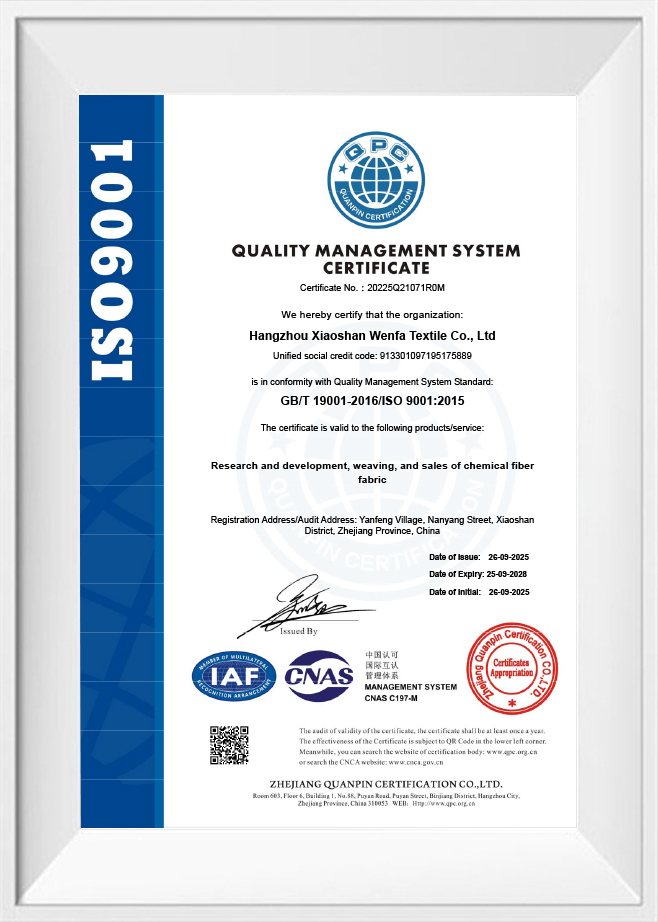
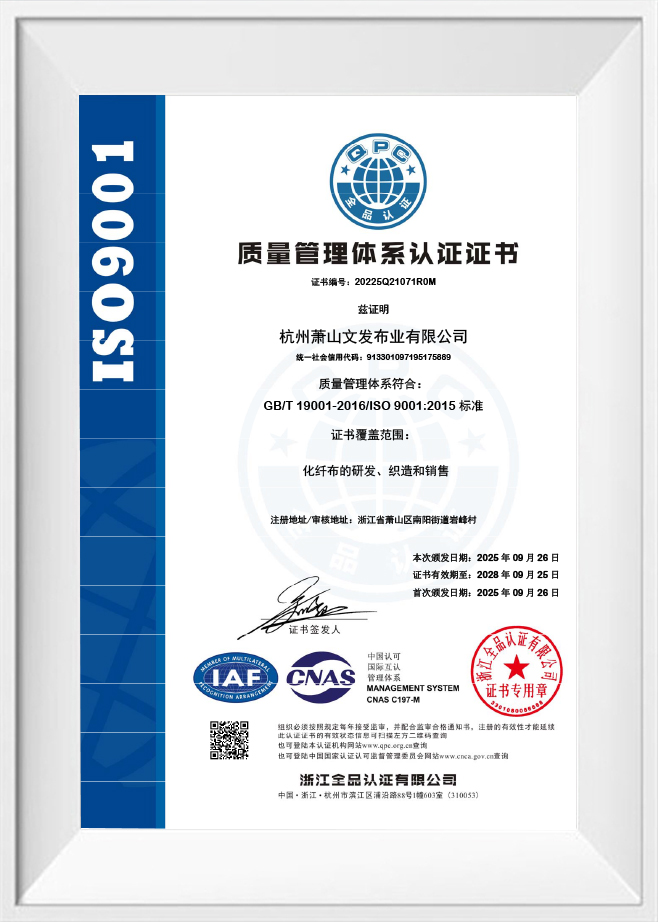
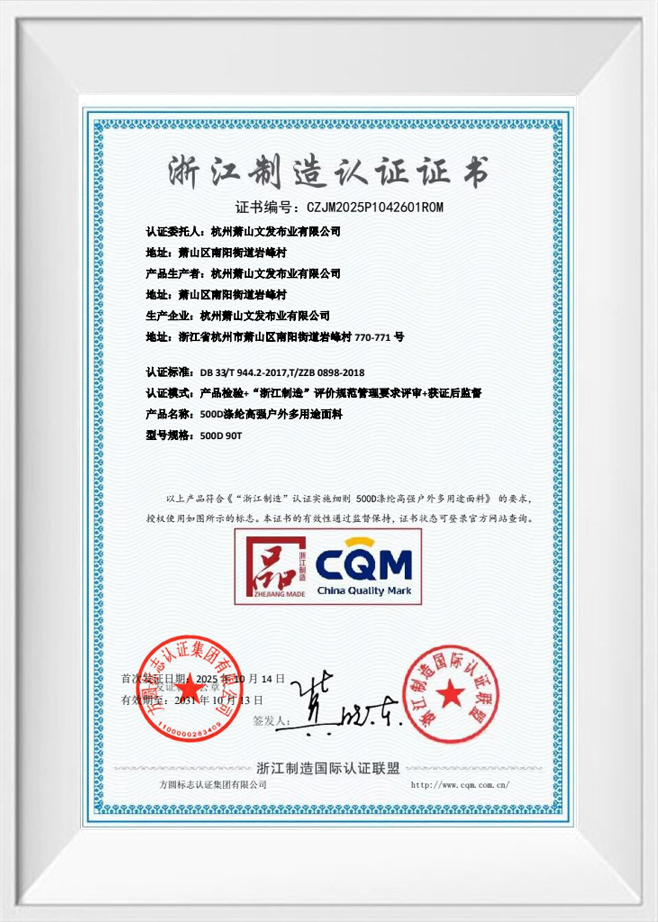
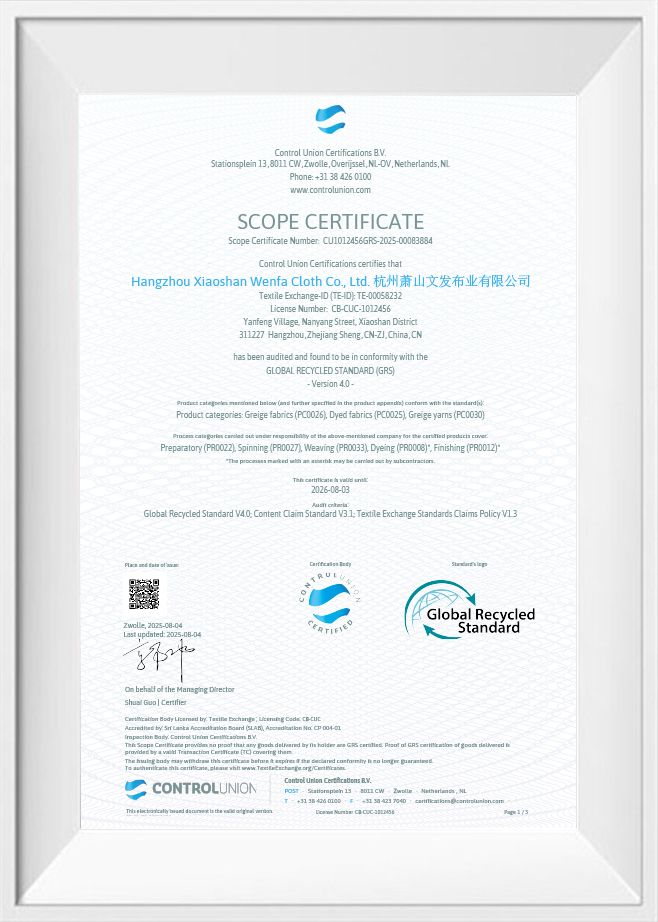
- Certification Scope Consistency: Check whether the OBP certificate covers the full chain from collection, washing, pelletizing, and spinning through to weaving, rather than just one isolated stage.
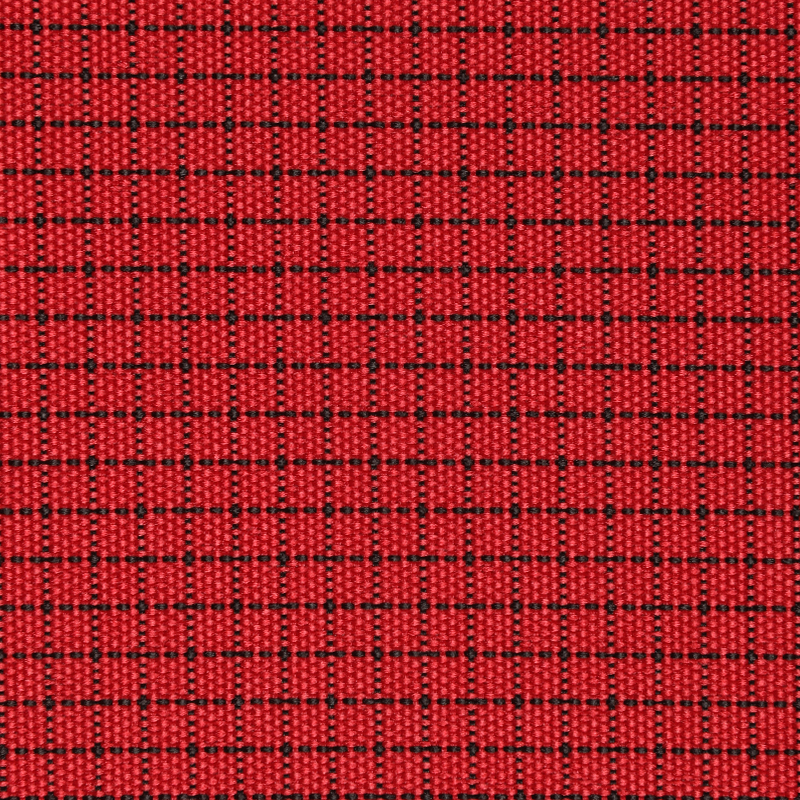
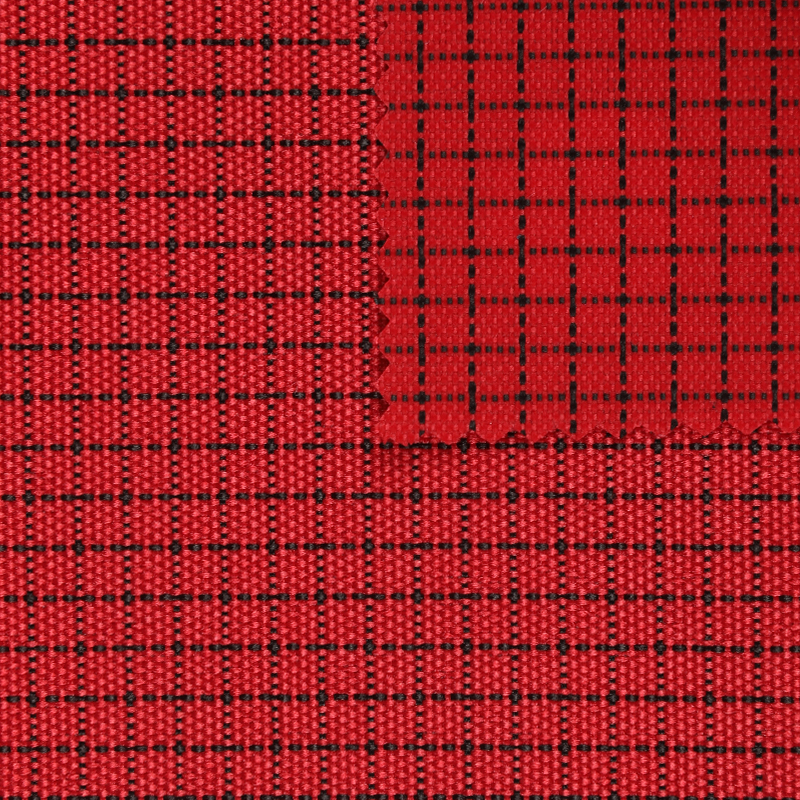
At Hangzhou Xiaoshan Wenfa Textile, we provide complete chain-of-custody documentation for every batch of OBP Certificate Fabric, making OBP CERTIFICATE FABRIC – this Recycled functional fabric – truly traceable from coast to bolt.
Why Closed-Loop Traceability Matters More Than the Certification Label
The certification label is the entry-level requirement, but the real risk control point lies in whether the factory has the ability to isolate materials by batch. We enforce strict batch management and clean operations on our production lines to prevent cross-contamination, ensuring the environmental purity of this Recycled functional fabric is never compromised.
How Water-jet looms Enhance the Dimensional Stability of Oxford fabric
Water-jet looms use high-pressure water streams to carry the weft yarn across the shed, causing significantly less abrasion damage to the yarn than rapier looms. This is especially critical for recycled polyester Oxford fabric:
- Reduced Fibrillation Tendency: Recycled fibers tend to fuzz more easily on the surface; water-jet weft insertion minimizes mechanical friction, resulting in less hairiness on the fabric face.
- Uniform Tension: The high-speed, stable jet insertion imparts consistent tension to each weft yarn, keeping the density variation of the Oxford weave within a very narrow range.
- Better Coating Compatibility: A flatter base fabric allows more even coating application during downstream PU/PA finishing, which is crucial for the hydrostatic head performance of waterproof Oxford fabric.
Hangzhou Xiaoshan Wenfa Textile Co., Ltd. is equipped with nearly 200 water-jet looms and achieves a daily output of approximately 160,000 meters of Oxford fabric. This enables us to guarantee to brand customers that even for high-volume orders, the fabric weight and physical strength remain highly consistent from batch to batch.
The Durability Truth of Recycled functional fabric: Lab-Tested Comparison Between OBP CERTIFICATE FABRIC and Conventional Oxford Fabric
There is a common misconception in the market that Recycled functional fabric inevitably sacrifices strength. However, under a well-controlled certified recycling process that incorporates melt filtration and intrinsic viscosity adjustment, OBP CERTIFICATE FABRIC can achieve mechanical properties very close to, or even on par with, virgin polyester Oxford fabric. The following comparison is based on test data from Oxford fabric of the same 600D specification:
| Test Item |
Conventional Polyester Oxford fabric |
OBP CERTIFICATE FABRIC |
| Breaking Strength (N) |
≥ 1200 |
≥ 1150 |
| Tear Strength (N) |
≥ 60 |
≥ 55 |
| Hydrostatic Resistance after Coating (kPa) |
≥ 30 |
≥ 28 |
Test conditions refer to ISO 13934-1, ISO 13937-3, ISO 811, with PA back coating.
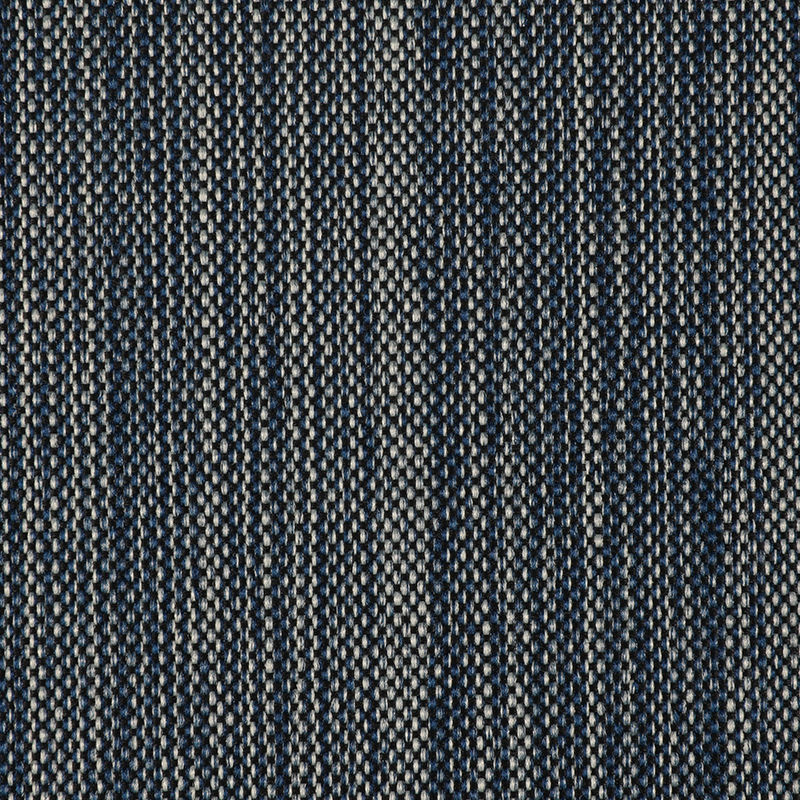
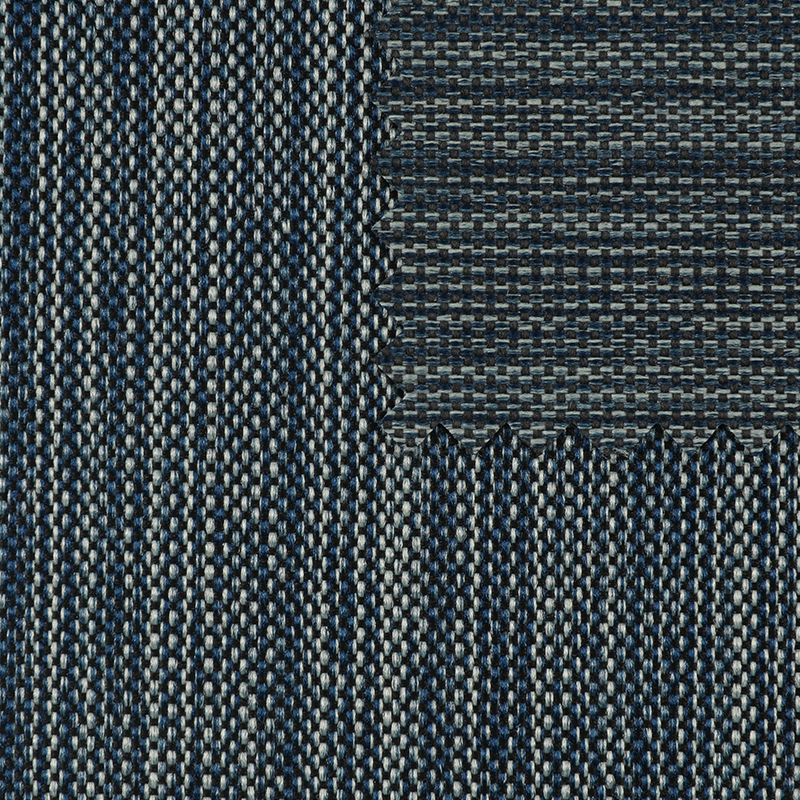
This level of property retention means that OBP recycled fabric can fully meet the high strength demands of outdoor backpacks, luggage, and children's strollers. If you need Custom OBP Certificate Polyester Fabric, we can further adjust the denier, coating formula, and colorfastness standards based on this foundation.
Launching Your Custom OBP Certificate Polyester Fabric Project: From Requirement Definition to Compliant Mass Production
Customizing Custom OBP Certificate Polyester Fabric is not simply a matter of picking a color. The following steps can help shorten your development cycle and ensure the finished product always remains within the OBP certification framework:
- Define the End-Use and Physical Requirements: First determine the minimum acceptable values for tensile and tear strength, as well as whether additional functions like flame retardancy or UV protection are needed. This dictates the base fabric weaving parameters.
- Select the Finishing Route: Water repellency, stain resistance, calendering, printing, and other finishing processes must use chemical auxiliaries that also meet environmental requirements, so as to maintain the integrity of the OBP certification.
- Sampling and Lab Testing: Conduct small-scale trial weaving and coating pilot trials first. Switch to bulk production only after passing third-party verification, thereby avoiding raw material waste.
- Confirm Certification Document Extension: Ensure that the newly added masterbatch, coating adhesives, and other auxiliary materials will not cause the batch to lose eligibility for the OBP claim, and request an updated annex to the certificate.
Backed by our own integrated production line, Hangzhou Xiaoshan Wenfa Textile provides ODM services from yarn customization to finished fabric, ensuring every meter of Custom OBP Certificate Polyester Fabric delivers both the performance you require and real ocean plastic reduction value.

 English
 русский
 Français
 Español
 中文简体
中文简体