Understanding Color Fastness and Durability in Printed Oxford Fabric
Color fastness is the measure of how well a printed fabric resists fading or bleeding when exposed to light, washing, and abrasion. For printed Oxford fabric, these properties are critical because the material is often used in demanding applications such as luggage, outdoor gear, and high-touch home textiles. Standard testing methods like ISO 105‑C06 for washing and AATCC 8 for crocking (rubbing) provide reliable benchmarks. At Hangzhou Xiaoshan Wenfa Textile Co., Ltd., every batch of our printed Oxford fabric undergoes rigorous quality checks, and results consistently reach Grade 4–5 on the ISO 105‑C06 washing test and Grade 4 on the AATCC 8 dry‑crocking scale. This ensures that the vibrant color saturation and sharp patterns remain intact even after extended use and repeated cleaning.
Lightfastness is equally important for outdoor‑oriented products. Using high‑performance dye systems, our printed Oxford fabric for backpacks and canopies achieves a Blue Wool Scale rating of 7–8, meaning it can withstand prolonged sun exposure without noticeable fading. The technical support behind our printing technique – whether digital sublimation for polyester Oxford or pigment printing for blended weaves – embeds or locks the color deep within the fiber structure, reinforcing the fabric’s inherent ruggedness with exceptional long‑term visual appeal.
How Denier and Weave Density Affect Print Sharpness on Oxford Fabric
Denier (D) indicates the linear mass density of the yarn, and together with the weave construction it determines the surface texture of Oxford fabric. A lower denier, such as 210D, produces a smoother, tighter surface that can faithfully reproduce very fine lines and photographic detail. Higher denier fabrics like 600D or 1680D introduce a more pronounced basket‑weave texture, which may slightly soften ultra‑fine elements but still delivers excellent clarity for bold logos and all‑over patterns. Selecting the right substrate is a practical step that directly influences the final print quality.
Table 1: Denier range versus recommended print detail on Oxford fabric
| Denier Range |
Typical Use |
Surface Character |
Print Detail Recommendation |
| 150D – 300D |
Lightweight bags, linings, windbreakers |
Smooth, low texture |
Ideal for fine lines and photorealistic prints |
| 420D – 600D |
Backpacks, tents, shoe uppers |
Moderately textured |
Excellent for medium detail and vivid spot graphics |
| 840D – 1680D |
Heavy‑duty luggage, tool bags |
Prominent basket weave |
Best for large color blocks and simple, bold motifs |
As dedicated Printed Oxford Fabric Manufacturers, Hangzhou Xiaoshan Wenfa Textile Co., Ltd. keeps an extensive inventory of multiple deniers and weaves. Our technical team works with clients to match the base fabric to the complexity of the design, so that the printing technique can deliver sharp, crisp patterns without compromising the cloth’s natural strength.
Eco‑Friendly Printing Processes for Oxford Fabric and Certification Significance
Sustainable production is now a decisive factor for international buyers. For polyester‑based Oxford fabric, dye‑sublimation printing transfers color directly into the fiber in a waterless process that creates practically zero wastewater. On nylon or poly‑cotton blends, we use water‑based pigment inks that can reduce volatile organic compound (VOC) emissions by up to 90% compared to solvent‑based alternatives. Our OEM/ODM Printed Oxford Fabric Factory integrates these low‑impact methods to meet both performance and environmental expectations.
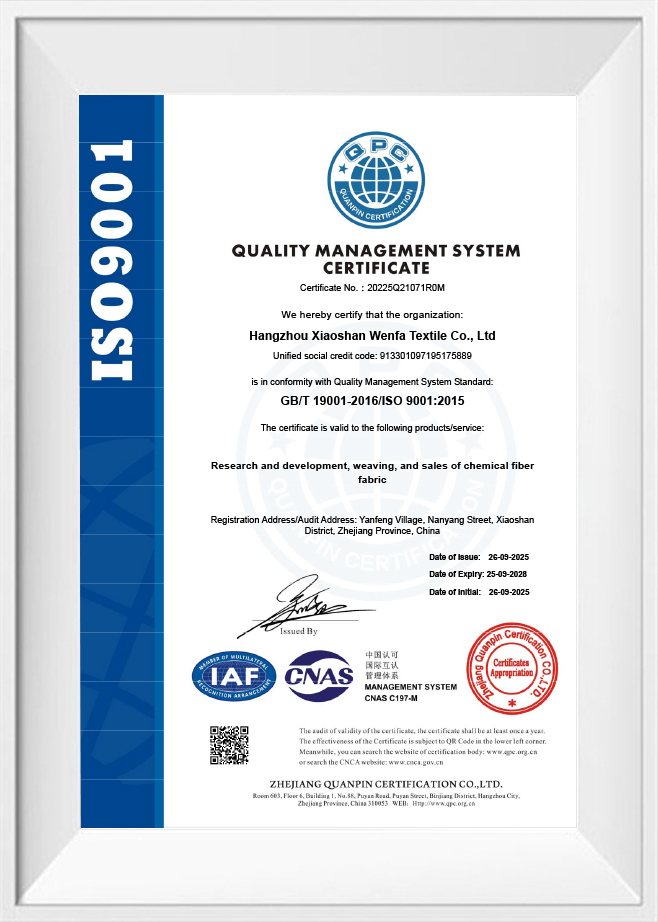
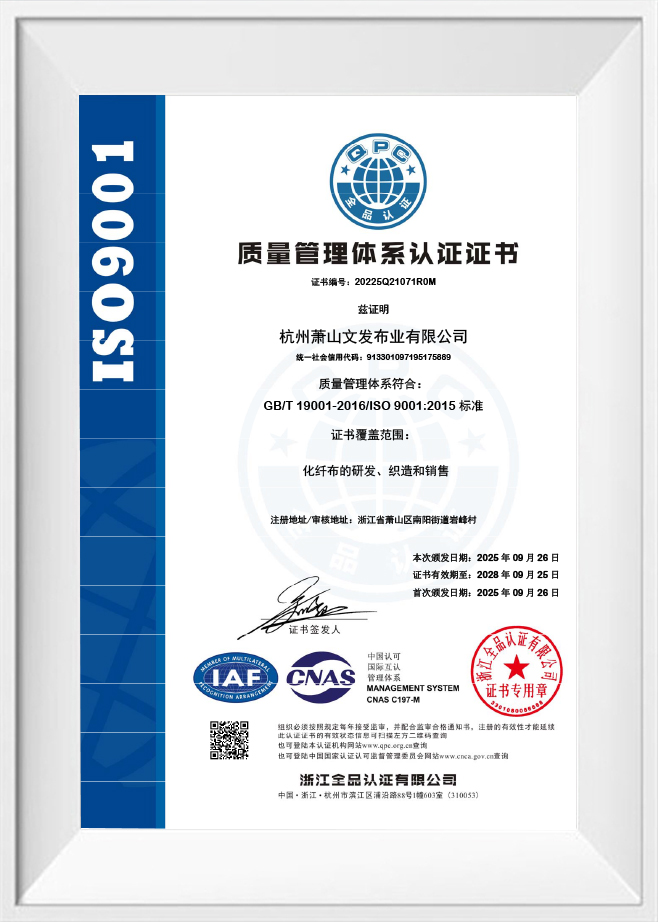
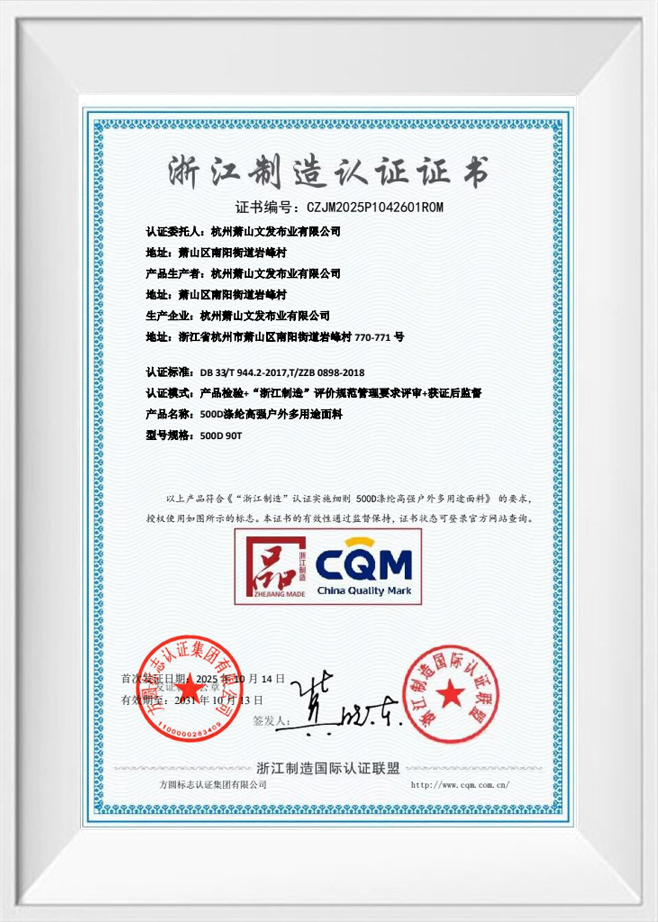
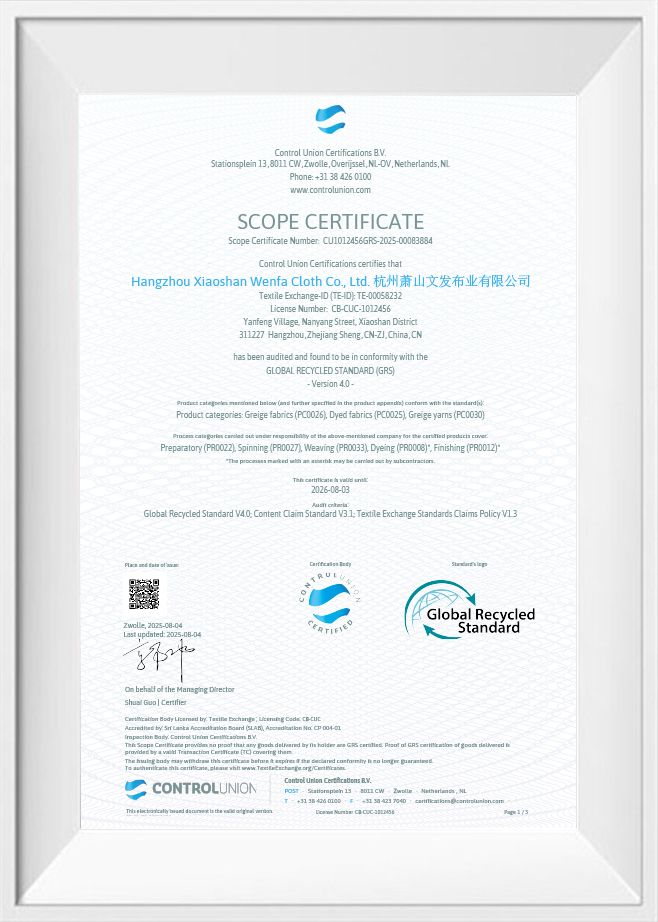
Third‑party certifications add tangible value. REACH compliance confirms that no restricted chemical substances are present, while the Global Recycled Standard (GRS) verifies recycled content and responsible social and environmental practices in production. Additionally, Ocean Bound Plastic (OBP) certification attests that raw material has been collected from at‑risk coastal areas. Hangzhou Xiaoshan Wenfa Textile Co., Ltd. holds REACH, GRS, and OBP certifications, giving you documented proof that the custom printed Oxford fabric you source meets strict global eco‑criteria.
When you Supply Custom Printed Oxford Fabric with us, you gain access to certified sustainable materials and printing processes. This alignment supports your brand’s green commitments and makes it easier to market finished goods to environmentally conscious consumers.
Preparing Design Files for Optimal Custom Printed Oxford Fabric
Getting the best out of the printing technique starts with correctly prepared artwork. Vector files are strongly recommended for logos and text because they scale without losing edge definition. For photographic or complex artistic patterns, raster images must be set to a minimum of 300 DPI at the actual print size; lower resolutions can cause visible pixelation, especially on the relatively structured surface of Oxford fabric.
- File formats: AI, EPS, PDF (vector preferred); PSD or TIFF (raster, with layers preserved).
- Color mode: CMYK with spot‑color references (Pantone) for accurate reproduction; RGB files may show unexpected color shifts.
- Bleed and safe zone: Add 5 mm bleed on all sides, and keep essential artwork at least 10 mm from the trim edge to prevent accidental cutting.
- Pattern repeats: For seamless all‑over prints, supply a precise repeat tile; our pre‑press team can assist in creating or adjusting repeats.
As a comprehensive OEM/ODM Printed Oxford Fabric Factory, we provide a pre‑production file check to catch potential issues before a single meter is printed. When you Supply Custom Printed Oxford Fabric through Hangzhou Xiaoshan Wenfa Textile Co., Ltd., our specialists ensure that the interplay between artwork, fabric texture, and print technology results in vibrant, durable, and precisely rendered patterns – turning your creative designs into standout finished products.

 English
 русский
 Français
 Español
 中文简体
中文简体