
 English
 русский
 Français
 Español
 中文简体
中文简体

Advantages of Functional Polyester Fabric?
2025-12-17
Functional polyester fabric is a type of material that builds on the properties of conventional polyester (polyethylene terephthalate) and gains special functionalities through modification, coating, finishing and other processes. It combines the inherent advantages of polyester with customized functional attributes, and its core benefits are as follows:
Retains the fundamental advantages of polyester fabric
High strength and wear resistance: Boasts excellent tensile strength, tear resistance and abrasion resistance. It is not prone to deformation or damage, ensuring a long service life, and is ideal for high-frequency use products such as outdoor gear and industrial protective clothing.
Wrinkle-resistant and easy care: Features a stable molecular structure that resists wrinkling. It can quickly regain its smoothness after washing without ironing, enabling convenient daily maintenance and meeting the needs of fast-paced lifestyles and industrial scenarios.
Good dimensional stability: Has a low heat shrinkage rate. It is resistant to shrinkage and deformation during washing, drying or exposure to high-temperature environments, and can maintain the shape of garments or products for a long time.
Cost-effective: Offers lower production costs compared with natural fabrics like cotton, wool and silk, while delivering multiple functionalities, thus demonstrating outstanding cost performance.
Functional expansion advantages (core selling points)
Moisture-wicking: Adopts profiled cross-section fibers (e.g., cross-shaped, Y-shaped) or hydrophilic finishing technology to rapidly transfer sweat from the skin surface to the outer layer of the fabric for evaporation, keeping the body dry. It is widely used in sportswear and labor protection clothing.
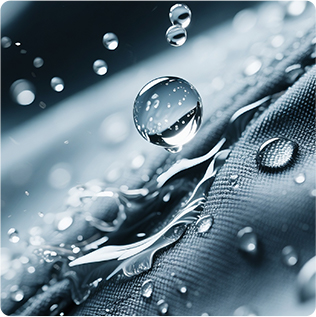
Waterproof and breathable: Utilizes laminating or coating technologies (e.g., PU coating, PTFE membrane) to block external rainwater from seeping in while allowing moisture generated by the human body to escape, preventing stuffiness. It is suitable for outdoor jackets and tent fabrics.
UV protection (UPF): Incorporates UV-resistant additives or high-density weaving processes to reflect or absorb ultraviolet rays, with a UPF rating of up to 50+, effectively blocking UV damage. It is applicable to sun-protective clothing and outdoor sunshade fabrics.
Antibacterial and odor-resistant: Implanted with antibacterial agents (e.g., silver ions, quaternary ammonium salts) to inhibit bacterial growth and reduce sweat odors, making it suitable for underwear, socks and medical uniforms.
Flame-retardant and fire-resistant: Undergoes flame-retardant finishing (e.g., phosphorus-based, halogen-based flame retardants). It is not easy to catch fire when exposed to flames, and produces no dripping, low smoke and low toxicity during combustion. It is used in firefighter uniforms, industrial protective clothing and decorative fabrics for public places.
Thermal insulation and heat retention: Adopts hollow fibers or fleece finishing processes to trap air and form a thermal insulation layer, enhancing warmth retention while keeping the fabric lightweight and non-bulky. It is applied to winter outdoor clothing and home textile fabrics.
Stable chemical properties
Resistant to acids, alkalis and chemical reagent corrosion, it is not easily eroded by sweat, detergents, etc. It is suitable for use in complex environments such as chemical industry and outdoor settings, and is also resistant to fading with high color fastness.



地址:
中国浙江省杭州市萧山区南阳街道岩峰村
Add:
Yanfeng Village, Nanyang Street, Xiaoshan District, Hangzhou,Zhejiang Province, China.


Copyright © Hangzhou Xiaoshan Wenfa Textile Co., Ltd.
All Rights Reserved.
 Polyester Fabric Manufacturers
Oxford Fabric Manufacturers
Polyester Fabric Manufacturers
Oxford Fabric Manufacturers