
 English
 русский
 Français
 Español
 中文简体
中文简体

Advantages of Coated Polyester Fabric?
2025-12-17
Coated polyester fabric is a modified material made by applying special functional coatings (such as PU, PVC, acrylic, PTFE) to the surface of polyester base fabric through dipping, spraying, or knife coating processes. It retains the inherent advantages of polyester and gains enhanced performance tailored to specific scenarios. Its core advantages are as follows:
Enhanced barrier properties
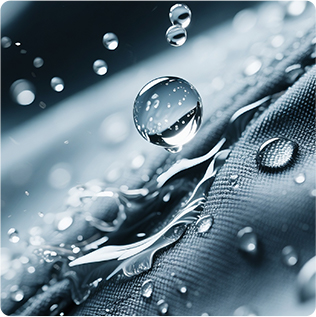
Waterproof & moisture-proof: The dense coating film blocks water molecules from penetrating, achieving different waterproof levels (from light rainproof to heavy rainproof). It is widely used in raincoats, awnings, and inflatable products.
Oil & stain resistant: Special coatings (like fluorocarbon coatings) can reduce the adhesion of oil stains and dirt on the fabric surface, making it easy to clean and maintain, suitable for tablecloths, work clothes, and outdoor upholstery.
Windproof: The coating fills the gaps between polyester fibers, forming a continuous barrier that effectively blocks wind penetration, improving the warmth retention of the fabric and applicable to windbreakers and cold-proof clothing.
Improved mechanical durability
Abrasion & tear resistance: The coating acts as a protective layer, reducing direct friction between the polyester base fabric and external objects, significantly enhancing the fabric’s wear resistance and tear strength, and extending its service life. It is ideal for industrial tarpaulins, tent floors, and luggage fabrics.
Scratch resistance: The hardened coating surface can resist slight scratches and friction damage, keeping the fabric’s appearance intact for a long time.
Retained core advantages of polyester
Wrinkle resistance: Maintains the stable molecular structure of polyester, not easy to wrinkle, and can quickly recover to a flat state after folding or washing, with low maintenance costs.
Dimensional stability: Low heat shrinkage rate, not easy to shrink or deform under washing, high-temperature drying, or long-term use, ensuring the fabric’s size consistency.
Cost-effectiveness: Compared with fully synthetic waterproof materials, it has lower production costs while providing comparable functional performance, achieving a good balance between quality and price.
Customizable functional attributes
Breathable: Selective use of microporous coatings (such as PTFE membrane coating) allows water vapor to pass through while blocking liquid water, solving the stuffiness problem of traditional coated fabrics and being suitable for high-end outdoor clothing.
UV resistance: Adding UV stabilizers to the coating can enhance the fabric’s ability to resist ultraviolet radiation, preventing fabric aging and fading, and applicable to outdoor sunshade fabrics and long-term outdoor use products.
Flame retardant: Incorporating flame retardant components into the coating enables the fabric to achieve flame-retardant effects, meeting the safety requirements of industrial protective clothing and public place decorative fabrics.
Good chemical stabilityResistant to corrosion by weak acids, weak alkalis, and common chemical reagents, not easy to degrade when used in harsh environments such as outdoor exposure and industrial workshops, and has excellent color fastness, ensuring long-term use without obvious fading.



地址:
中国浙江省杭州市萧山区南阳街道岩峰村
Add:
Yanfeng Village, Nanyang Street, Xiaoshan District, Hangzhou,Zhejiang Province, China.


Copyright © Hangzhou Xiaoshan Wenfa Textile Co., Ltd.
All Rights Reserved.
 Polyester Fabric Manufacturers
Oxford Fabric Manufacturers
Polyester Fabric Manufacturers
Oxford Fabric Manufacturers