
 English
 русский
 Français
 Español
 中文简体
中文简体

Coated Polyester Fabric: Types, Applications & Sourcing Guide
2026-05-26
Content
Pick the wrong coating and your product fails in the field — waterproofing peels, seams crack, colors fade. Coated polyester fabric is deceptively simple as a category name, but the coating type you choose determines everything: how the product performs, how long it lasts, and whether it passes compliance audits in target markets. Here is a focused breakdown of what actually matters when sourcing or specifying this material.
What Coating Actually Does
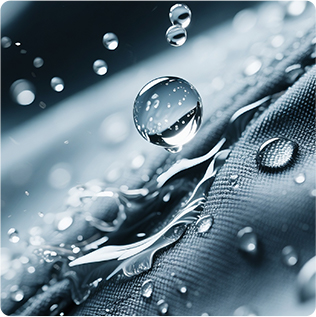
Standard polyester is tough but porous — water passes through, UV degrades the fiber over time, and abrasion wears the surface. A coating seals that gap. Applied as the final production step, it bonds a polymer layer to the base fabric, converting a commodity textile into a functional material. The right coating can push a 600D Oxford fabric's hydrostatic pressure resistance above 3,000 mm H₂O — the threshold commonly required for waterproof performance in outdoor gear. Without it, the same base fabric might measure under 500 mm.
The coating process itself varies: knife coating for precise, uniform thickness; roller coating for high-volume runs; dip coating for full encapsulation. Each method suits different end-use requirements and production scales. Understanding which process produced the fabric you are buying tells you a great deal about its consistency.
The Six Coating Types — and When to Use Each
Most manufacturers offer a standard shortlist. Here is how they compare in practice:
| Coating | Key Strength | Best Use Cases | Watch Out For |
|---|---|---|---|
| PU (Polyurethane) | Flexible, lightweight, breathable | Backpacks, rain jackets, travel bags | Lower UV resistance than PVC; thinner coats degrade faster |
| PVC (Polyvinyl Chloride) | Maximum waterproofing, chemical resistance | Truck tarps, industrial covers, heavy-duty outdoor gear | Heavier; plasticizers can leach over time; less eco-friendly |
| PA (Polyamide / Nylon) | Soft hand-feel, good adhesion, moisture management | Lightweight luggage linings, fashion bags | Not as waterproof as PU at equivalent thickness |
| TPU (Thermoplastic Polyurethane) | Elastic, cold-crack resistant, recyclable | Performance sportswear, inflatable products, eco projects | Higher cost; requires specific bonding processes |
| TPE (Thermoplastic Elastomer) | Soft texture, recyclable, good chemical resistance | Children's products, stroller fabrics, eco-sensitive markets | Less abrasion resistance than PVC |
| Film Lamination | Extremely smooth surface, high tensile integrity | Luggage shells, protective covers, banners | Limited breathability; delamination risk if bonding is poor |
PU is the default for consumer-facing applications — lighter, softer, and increasingly compliant with European chemical regulations (REACH). PVC remains the workhorse for industrial and heavy-duty applications where performance outweighs aesthetics. TPU and TPE are gaining share in eco-conscious and children's product categories because both are recyclable and free from plasticizer concerns.
Matching Coating to Application
The most common sourcing mistake is selecting a coating based on price alone, without anchoring it to the end-use environment. Three questions sharpen the decision fast:
- Will it face prolonged UV exposure? If yes, PVC or a UV-stabilized PU outperforms standard PU. A product used outdoors daily — tent fabric, a beach chair — needs a UPF rating backed by testing, not just a supplier claim.
- Does the product contact children or food? Regulatory compliance matters here. Fabrics for strollers and children's backpacks should meet EN 71 (toy safety) or equivalent, with certifications like GRS or OCI for eco-assurance.
- What is the weight budget? PVC-coated 600D Oxford can run 380–450 g/m², whereas an equivalent PU-coated version sits closer to 280–320 g/m². For luggage and carry products, that gap compounds across an entire product line.
Denier and Coating Work Together
Coating performance is inseparable from base fabric specification. A 300D base with a thick PU coat behaves differently from a 600D base with a thin one — and not always predictably. Higher denier means a denser weave with more surface area for the coating to grip, translating to better abrasion resistance and tear strength. Lower denier saves weight but requires a heavier coating to compensate, which can stiffen the hand-feel.
For bag and luggage fabrics, 600D PU-coated Oxford hits a practical sweet spot — durable enough for daily use, light enough for carry-on weight limits. For heavy-duty outdoor gear like tents and beach chairs, moving to 900D or 1200D with PVC or TPU coating adds the structural rigidity that repeated assembly and exposure demands.
Quality Signals to Check Before Ordering
Coated polyester is easy to misrepresent because differences in coating weight and adhesion are invisible to the eye. Before committing to a supplier, verify these four things:
- Hydrostatic pressure test result — ask for the actual mm H₂O figure, not just "waterproof."
- Coating adhesion data — peel strength testing tells you how well the coating bonds under stress and flexing.
- Certifications on file — ISO manufacturing certification, REACH compliance, and sustainable sourcing certs (GRS, OBP) are not equivalent; know which your market or buyer requires.
- Colorfastness rating — coating affects dye stability. A rating below 4 on the ISO grey scale means visible fading within a season of outdoor use.
Manufacturers with integrated production — weaving, dyeing, and coating under one roof — tend to deliver more consistent results because each stage is controlled in sequence rather than handed off across suppliers.
Sustainability Is Now a Specification
The conversation around coated polyester has shifted. European buyers increasingly require documentation, not declarations. Recycled polyester base fabrics paired with low-VOC coatings can carry GRS certification, which provides chain-of-custody verification from recycled fiber source through finished fabric. OBP (Ocean Bound Plastic) certification goes a step further, sourcing fiber from plastic waste collected near coastal areas. These are not marketing labels — they require third-party audits and specific supply chain documentation. If your buyers or retail partners are in the EU or UK, ask for these upfront.
Coating chemistry is also under scrutiny. Low-VOC PU formulations and halogen-free flame retardants are replacing older chemistries across responsible supply chains. The cost premium is typically 5–12%, but it removes the risk of shipment rejection at customs or retailer delisting for non-compliance.



地址:
中国浙江省杭州市萧山区南阳街道岩峰村
Add:
Yanfeng Village, Nanyang Street, Xiaoshan District, Hangzhou,Zhejiang Province, China.


Copyright © Hangzhou Xiaoshan Wenfa Textile Co., Ltd.
All Rights Reserved.
 Polyester Fabric Manufacturers
Oxford Fabric Manufacturers
Polyester Fabric Manufacturers
Oxford Fabric Manufacturers