
 English
 русский
 Français
 Español
 中文简体
中文简体

Functional Polyester Fabrics: 8 Types, Applications & How to Choose
2026-05-21
Content
Choosing the wrong fabric for a high-performance application is an expensive mistake—one that often surfaces only after production, in the field, or under audit. Functional polyester fabrics exist precisely to remove that risk: they take polyester's well-established durability and cost efficiency, then engineer specific protective or performance characteristics directly into the fiber, yarn structure, or finishing process.
This guide breaks down the eight main functional types, how each one is achieved, and which applications genuinely benefit from them.
What Makes a Polyester Fabric "Functional"?
Standard polyester already offers decent tensile strength, dimensional stability, and low moisture absorption. Functional finishing pushes it further—adding properties the base fiber does not inherently possess. These enhancements are delivered through three main routes: fiber-level modification (co-polymerization or blending), coating or lamination after weaving, and chemical finishing treatments applied in post-processing.
The key engineering challenge is function stacking—combining multiple properties without degrading each other or weakening the base cloth. Waterproofing, for example, can interfere with antistatic performance if the finishing sequence is wrong. This is why the manufacturing know-how behind functional polyester matters as much as the chemicals used.
The 8 Core Functional Types and How to Use Them
1. Waterproof Fabric
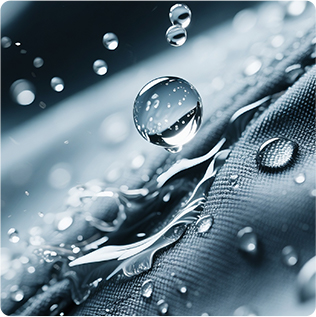
Waterproof polyester is typically achieved through PU, PVC, PA, or TPU coatings applied to one or both faces of the base cloth. The hydrostatic head rating (measured per ISO 811) tells you how much water pressure the fabric can withstand before leaking. For outdoor gear like tents and beach chairs, a rating of 1,500 mm+ is a reasonable baseline; technical applications may require 3,000 mm or higher. waterproof polyester fabric options with PU, PVC, and TPU coatings vary significantly in weight, hand feel, and durability—choosing the right coating type for your end product matters.
2. Flame-Retardant Fabric
Polyester itself is not inherently flame-resistant, but it can be engineered to meet protective standards through FR chemical finishing or co-polymerized FR yarns. Compliance targets vary by market: EN 14116 and EN 11612 are common European benchmarks for protective workwear, while NFPA 701 governs many North American applications. An oxygen index of 30 or above is typically the threshold for meaningful FR performance. flame-retardant polyester fabrics for workwear and protective applications are particularly relevant for petrochemical, welding, and construction environments.
3. Antistatic Fabric
Static buildup is a hazard in electronics manufacturing, fuel handling, and cleanroom environments. Antistatic polyester is produced by weaving in conductive yarns (typically carbon-core or metal-blended filaments) at regular intervals. The result is a fabric with surface resistivity low enough to safely dissipate electrostatic discharge. EN 1149 is the standard most European buyers reference. antistatic fabric engineered for hazardous and ESD-sensitive environments is available across a range of weights and constructions.
4. High-Strength Fabric
For luggage, heavy-duty bags, and industrial covers, tensile and tear strength are the primary selection criteria. High-strength variants typically use higher-denier yarns (600D–1800D or above) in tight weave structures. The denier count directly correlates with yarn thickness and fabric weight—high-strength polyester fabric across multiple denier specifications lets buyers match the structural requirement to the load their product will bear.
5. Abrasion-Resistant Fabric
Abrasion resistance is critical for shoe uppers, backpacks, and any product that sees repetitive surface contact. It is evaluated by the Martindale or Wyzenbeeck test methods, with higher cycle counts indicating longer wear life. Tighter weave densities and surface coatings both contribute to improved abrasion performance. Explore abrasion-resistant fabric built for high-contact product applications when durability over the product lifecycle is a spec requirement.
6. Anti-UV Fabric
Prolonged UV exposure degrades unprotected polyester—fading color and reducing tensile strength. Anti-UV functional fabric is rated by its Ultraviolet Protection Factor (UPF). UPF 50+ blocks more than 98% of UV radiation, making it the standard for outdoor canopies, stroller covers, and sun-protective apparel. Chemical UV absorbers or physical blocking agents (such as titanium dioxide) are integrated at the yarn or finishing stage. See anti-UV polyester fabric rated for outdoor and sun-protective product use for specs and sample options.
7. Antibacterial Fabric
Antimicrobial treatments suppress the growth of bacteria and odor-causing microbes on the fabric surface—important for kids' products, medical textiles, and performance apparel. Silver-ion and zinc-based agents are the most common, evaluated against standards like ISO 20743 or AATCC 100. The durability of the treatment after repeated washing is the most important performance variable to verify at the sampling stage. antibacterial fabric with wash-durable antimicrobial treatment is especially relevant for children's and healthcare-adjacent products.
8. Signal Shield (RFID Shield) Fabric
A more specialized category: RFID-shielding fabrics block electromagnetic signals in the 13.56 MHz and 860–960 MHz bands used by contactless payment cards and NFC-enabled devices. The shielding is achieved by incorporating metallic fibers or conductive coatings into the fabric structure. This is a functional requirement now built into travel wallets, passport holders, and secure document cases. RFID signal shield fabric for contactless card and device protection serves this fast-growing niche.
Matching Function to Application: A Practical Reference
| Application | Primary Functional Need | Secondary Consideration |
|---|---|---|
| Outdoor Gear (Tents, Chairs) | Waterproof, Anti-UV | Flame-retardant (market-dependent) |
| Luggage & Bags | High-Strength, Abrasion-Resistant | Waterproof coating |
| Workwear & PPE | Flame-Retardant, Antistatic | Abrasion-resistant |
| Kids' Products (Strollers) | Anti-UV, Antibacterial | High-strength for frame contact points |
| Shoe Uppers | Abrasion-Resistant | Antibacterial |
| Travel Accessories | RFID Shield | Abrasion-resistant |
Compliance and Sustainability Considerations
Functional finishing must not create hidden compliance liabilities. REACH regulations restrict certain chemical agents used in waterproofing and FR treatments—particularly PFAS compounds and halogenated flame retardants. Buyers supplying European and North American markets should confirm that any functional treatment is REACH-compliant before committing to bulk production.
For brands with sustainability mandates, functional finishes can be layered onto GRS-certified recycled polyester—delivering both performance and traceability. Certifications such as GRS (Global Recycled Standard) and OBP (Ocean Bound Plastic) are increasingly required by retail and brand buyers as proof of material origin. eco-friendly and GRS-certified polyester fabric options can be combined with functional finishes when both requirements apply simultaneously.
What to Verify at the Sampling Stage
Before placing a bulk order for functional polyester fabric, four things should be tested on the actual sample rather than taken at face value from a spec sheet. First, wash durability—most functional finishes degrade over repeated laundering, and the rate of degradation varies widely by bonding method. Second, hand feel—functional coatings and treatments often stiffen the cloth; confirm it meets your product's tactile requirements. Third, colorfastness—some functional treatments interfere with dye uptake or accelerate fading. Fourth, compliance documentation—request test reports for the specific standard relevant to your target market, not generic claims.
Functional polyester is not a commodity. The performance difference between fabrics with the same marketing label but different R&D input can be significant in the field. Sampling rigorously and sourcing from manufacturers with documented finishing expertise is the most reliable way to get what you pay for.



地址:
中国浙江省杭州市萧山区南阳街道岩峰村
Add:
Yanfeng Village, Nanyang Street, Xiaoshan District, Hangzhou,Zhejiang Province, China.


Copyright © Hangzhou Xiaoshan Wenfa Textile Co., Ltd.
All Rights Reserved.
 Polyester Fabric Manufacturers
Oxford Fabric Manufacturers
Polyester Fabric Manufacturers
Oxford Fabric Manufacturers