How Abrasion Resistance Is Specified in Bulk Orders
Common testing language buyers can use
- Specify the method (e.g., Martindale or Taber), then define cycles and evaluation standards.
- Define whether you care about “no hole” only, or also appearance retention (fuzzing, pilling, gloss loss).
- If coating exists, require separate criteria for coating wear-through versus yarn break.
In Wenfa's experience supplying Abrasive Resistance Fabric to high-friction applications, aligning test language up front prevents costly back-and-forth at sample approval.
Selecting Oxford Fabric Structure for Wear Hotspots
Abrasion failures are often localized (bag bottoms, sofa armrests, curtain contact edges). Instead of upgrading the whole product, many brands map “wear hotspots” and reinforce only those panels—reducing material cost while improving service life.
Practical construction levers that affect abrasion
- Higher yarn density typically improves abrasion tolerance by increasing fiber-to-fiber support under friction.
- Balanced weave and stable interlacing reduce yarn slippage, which helps prevent premature thinning.
- For coated articles, coating hardness and adhesion matter as much as base cloth—poor adhesion can “peel” under repeated rubbing even if the fabric is strong.
If you share your end-use stress points, I can usually recommend a structure/coating direction that hits performance without over-engineering.
Abrasion Resistance vs. Pilling: Why They’re Not the Same Spec
Bulk buyers often discover late that “no holes after rubbing” does not guarantee a clean surface appearance. Pilling and fuzzing can happen before structural failure, especially in daily-use goods where visual quality drives returns.
How to write a two-part requirement
- Structural abrasion target: cycle count until yarn break / hole.
- Appearance target: pilling grade (or visual change limits) at an intermediate cycle point.
- For consumer-facing items (sofas/backpacks), require appearance retention to avoid “dull” or “worn” look even when strength remains.
Coating and Finish Choices That Influence Wear Life
For Oxford fabric, abrasion performance is frequently a system outcome: base cloth + coating + finishing. When friction is severe, the outermost layer sacrifices first—so the coating/finish should be selected to “consume” slowly without cracking, dusting, or peeling.
A practical view of how common finish goals relate to abrasion behavior
| Finish / Goal |
Typical abrasion implication |
Buyer note |
| Higher surface hardness |
Slower surface wear, but risk of micro-cracking if too brittle |
Ask for bend/flex checks in addition to rub testing |
| Higher coating adhesion |
Reduces peeling and “film lift” under repeated friction |
Adhesion is critical for bags and gloves |
| Lower friction (slick hand) |
Reduces heat build-up and surface fuzzing |
Useful for curtains, upholstery contact points |
| Matte / anti-gloss |
Can hide light scuffs; may show burnish if poorly engineered |
Define appearance criteria at cycle checkpoints |
When we develop abrasion-resistant fabrics, we typically balance “wear rate” and “appearance stability” so the fabric stays presentable instead of simply staying unbroken.
Certification Signals That Matter to International Buyers
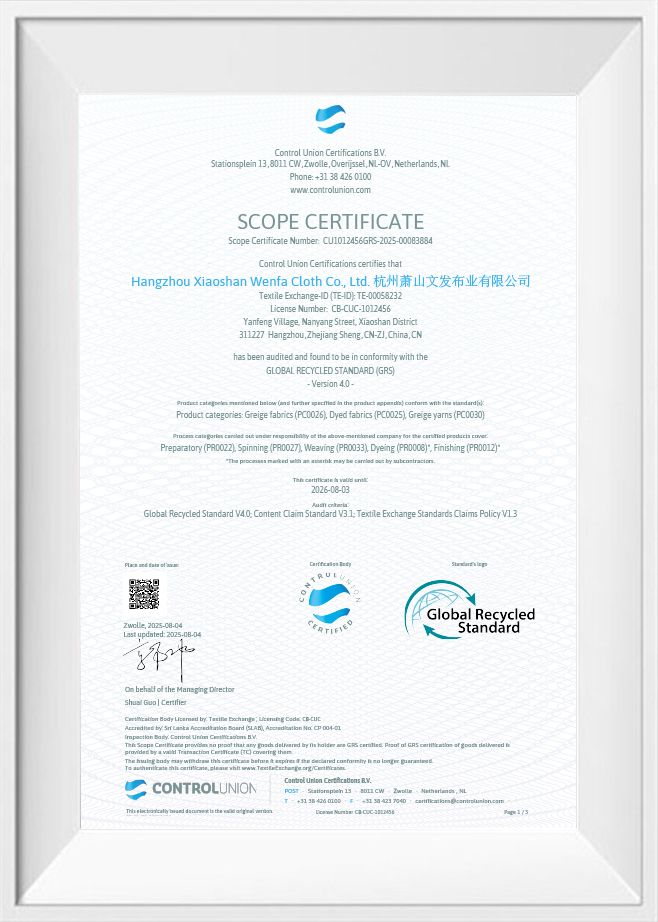
For EU/US and brand compliance teams, certifications are not just “documents”—they determine whether the material can enter specific supply chains. When sourcing abrasion-resistant fabrics for daily goods and workwear, the most common friction point is chemical compliance and recycled-content claims verification.
How common compliance standards are typically used in sourcing decisions
| Standard |
What buyers usually rely on it for |
Practical note |
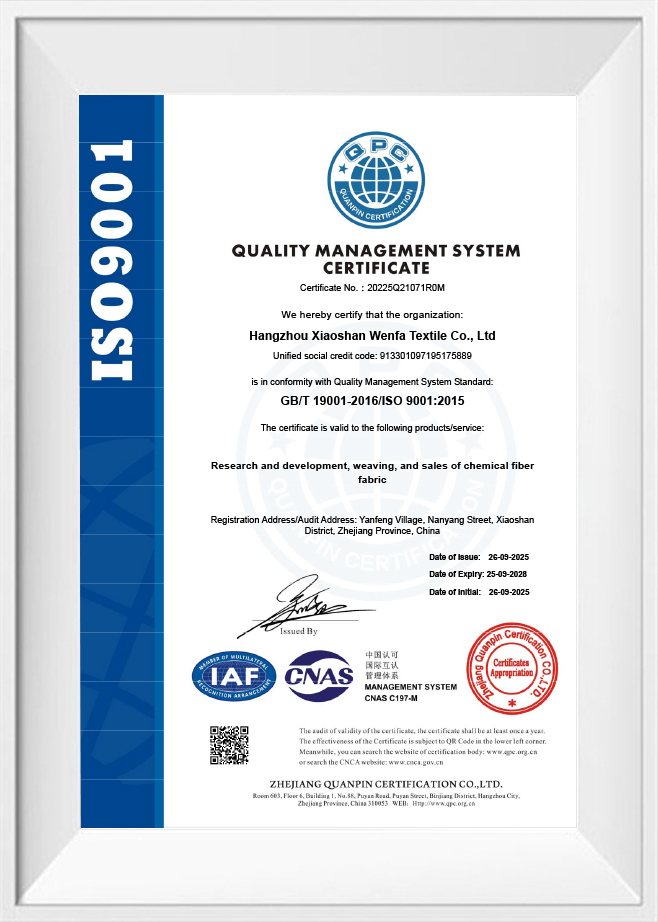
| ISO systems |
Process control and consistency |
Useful for reducing batch variability risk |
| REACH |
EU chemical compliance expectations |
Critical for EU distribution |
| GRS |
Recycled content + chain of custody |
Align labeling/claims with certificate scope |
| OBP |
Ocean-bound plastic claims governance |
Ensure traceability requirements are met |
Because we already work with Europe, the Americas, and Southeast Asia, we’re accustomed to aligning documentation and test reports to different importer expectations without slowing down your procurement cycle.

 English
 русский
 Français
 Español
 中文简体
中文简体