Inherent vs. Treated Flame Retardancy: What Bulk Buyers Should Lock In
For procurement, the most practical distinction is whether FR performance is inherent (built into the polymer) or treated (a finish applied after weaving/coating). The choice impacts durability, compliance risk, and total cost of ownership.
How it affects long-term performance
- Treated FR may show reduced performance after repeated washing, abrasion, or aggressive detergents, especially if your end use includes laundering.
- Inherent FR typically offers more stable FR behavior across the product lifecycle, but can carry higher material cost.
- For coated Oxford fabrics, confirm whether the FR effect relies on the coating layer, the base fabric, or both—this determines wear-out modes.
In Wenfa's experience supplying bulk programs, aligning the FR mechanism with your actual “use-and-abuse” conditions is the fastest way to prevent field failures and costly re-certification cycles.
FR Performance vs. Coatings: PU/PVC Choices Can Change Your Fire Behavior
For flame-retardant polyester fabric used in luggage, outdoor gear, covers, and upholstery, coatings are often essential. However, coatings can influence ignition, flame spread, smoke, and dripping behavior—sometimes improving resistance, sometimes introducing new risks depending on formulation.
How coating decisions can influence flame-retardant fabric behavior in typical end-use scenarios.
| Procurement variable |
What it can change |
What to ask your supplier |
| Coating type & thickness |
Ignition behavior, flame spread pathway, drip tendency |
Is FR achieved by base fabric, coating, or both? |
| Adhesion & aging resistance |
Delamination can expose non-FR layers and shift test outcomes |
Any aging/heat/humidity conditioning data available? |
| Print/lamination top layers |
Surface chemistry changes can impact ignition and smoke |
Does the final composite match the tested construction? |
If you need volume stability, I typically recommend locking the exact construction (base + coating + any lamination) early—once the bill of materials is frozen, our daily output capacity helps keep your supply consistent without spec drift.
Certifications vs. End-Use Compliance: How to Avoid “Paper Pass, Field Fail”
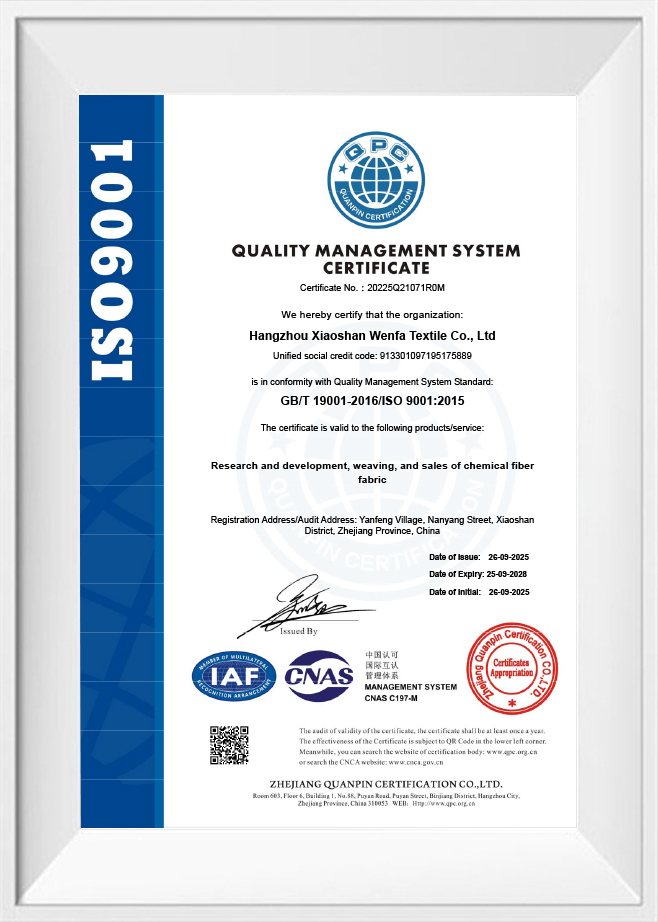
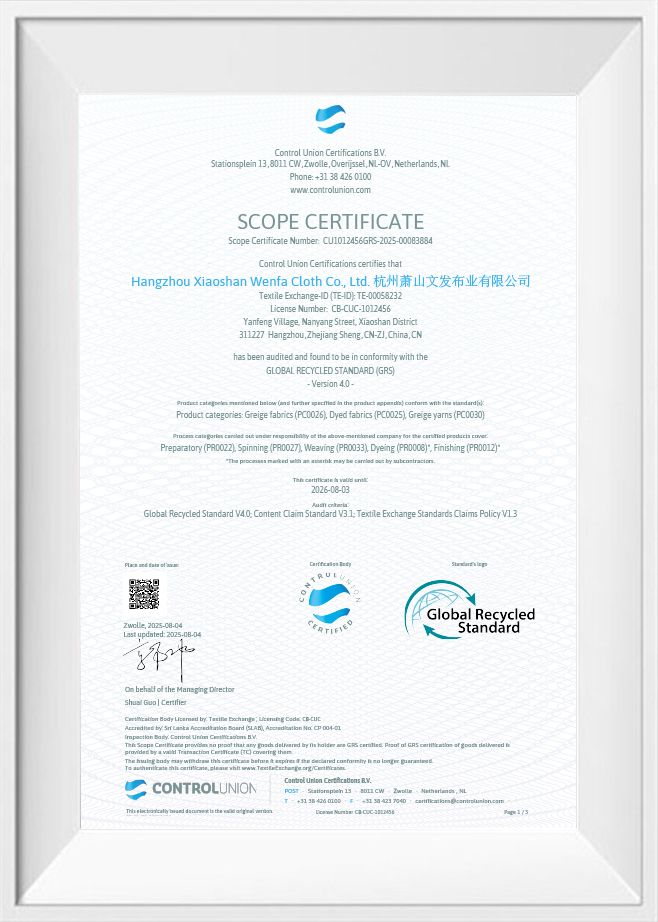
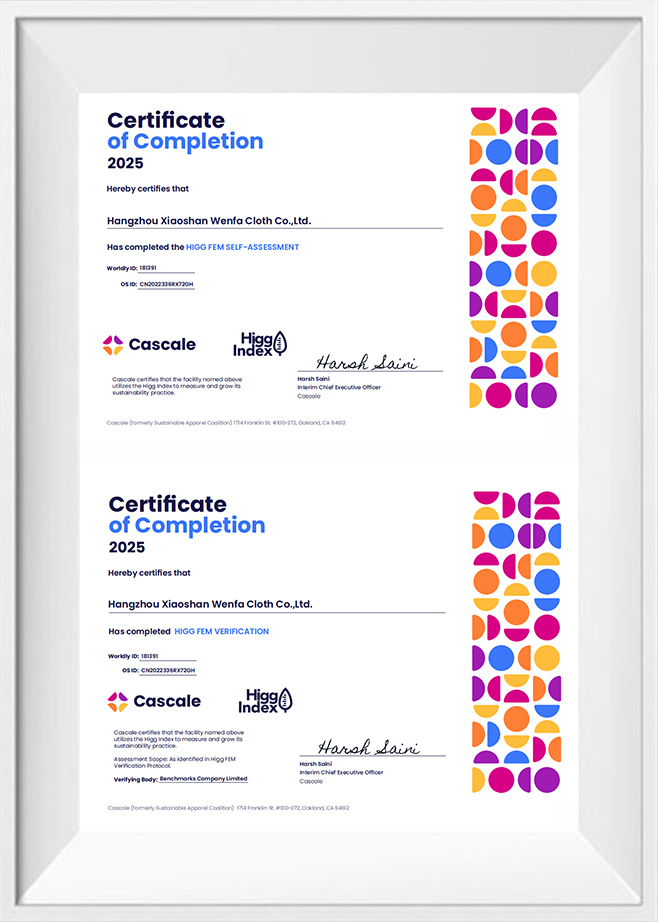
ISO and sustainability frameworks (REACH, GRS, OBP) support quality management and responsible sourcing, but they are not a substitute for end-use flame standards. Bulk buyers can reduce compliance churn by separating “factory qualification” from “product construction qualification.”
A procurement-safe approach
- Qualify the manufacturer for system controls (traceability, incoming inspection, batch records), then qualify the exact fabric construction for the target FR standard.
- Ensure the tested sample is representative of production: same yarn, weave, coating, colorants, and finishing route.
- Require a “change control” clause: any change to key inputs triggers re-validation or buyer approval.
This is exactly where stable manufacturing capacity matters; with hundreds of looms and consistent output, Wenfa can keep the production recipe aligned to what was approved.
Specification Details That Actually Move Cost and Risk for FR Oxford Fabric
If you want fewer back-and-forth cycles with suppliers, focus on the parameters that drive both FR behavior and manufacturability—then keep the rest flexible.
High-impact RFQ fields for flame-retardant polyester Oxford fabric in bulk procurement.
| RFQ field |
Why it matters |
Typical pitfall |
| Final construction (base + coating) |
Determines the tested FR behavior of the finished product |
Testing base fabric only, then changing coating later |
| FR retention condition |
Controls lifecycle compliance and warranty exposure |
No post-wash/abrasion requirement specified |
| Color & print method |
Dyes/inks can influence ignition and smoke characteristics |
Approving FR on one colorway, mass producing another |
| Width, shrinkage, and stability |
Affects cutting yield and downstream assembly efficiency |
Ignoring stability until production ramp |
Application Notes: Matching FR Oxford Fabric to High-Risk Scenarios
The same “Flame-Retardant Fabric” label can represent very different performance priorities depending on where it is used. A pragmatic approach is to match the fabric construction to the dominant risk: ignition source, contact duration, and surrounding materials.
Common scenario-driven considerations
- Industrial workwear: prioritize FR retention after laundering and abrasion; validate seam and trim compatibility.
- Public space interiors: prioritize flame spread limitation and low ignition propensity; confirm behavior in finished assemblies (curtain headings, upholstery composites).
- Transportation seating: prioritize durability and consistency of composite materials; maintenance and cleaning protocols must be reflected in the test plan.
- Home textiles: balance comfort, aesthetics, and FR; confirm any odor/hand-feel changes introduced by FR finishing.
If you are sourcing for Europe, the Americas, or Southeast Asia, aligning the test plan to the destination market early prevents late-stage changes that can disrupt delivery.

 English
 русский
 Français
 Español
 中文简体
中文简体